|
| Charles I in 3 Positions by Van Dyck, c.1635 |
The anniversary of the execution of Charles I on January 30th, 1649, has just passed. The mention of that year immediately makes me think of Billy Bragg's version of the song The World Turned Upside Down from 1985, which begins
"In 1649, to St. George's Hill - a ragged band they called The Diggers came to show the people's will . . ."
If you don't know it, or to have the pleasure of refreshing your memory, you can listen to that song here:
Billy states on his Facebook page (1 Dec 2013) that he first heard the song played by the folk singer Roy Bailey at Sheffield City Hall during the Miners' Strike.
As I researched a little in to the history of the song, it struck me that it stands as a very good example of how a song evolves - its origin is known & the steps of its evolution easily traced. It was written by Leon Rosselson & released in 1975. Leon & Roy Bailey were musical partners at the time:
Then there is the absolutely beautiful version by the folk singer Dick Gaughan, released in 1981:
Now you can see what Billy Bragg did to the song. He simplified the chords of the guitar accompaniment to the most basic necessary - to what the chords are fundamentally - & speeded it up to make it more aggressive & more rousing. This version therefore stands as a testament to the virtues - sometimes - of simplicity. Observe that Billy's version makes it most obvious that the song has no chorus and no middle 8. It consists of the verse again & again, & nothing else. This makes the song insistent, & also free of unnecessary elements or distracting clutter.
Another thing this song demonstrates is the power of words & music together as a mnemonic. If you know the song, it is very easy to remember where - at St. George's Hill - & when - in 1649 - that The Diggers tried to set up their commune. You have learned this in a very permanent way almost without effort because of taking pleasure in the song.
 |
| Ewan MacColl |
 |
| Martin Carthy |
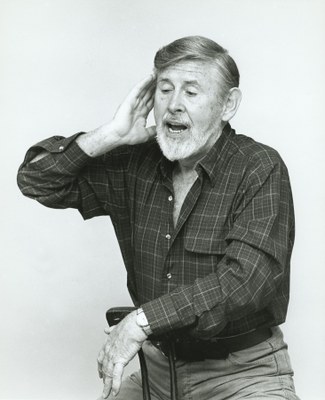
I am not personally in full agreement with the politics of this song. For instance I do not believe in common ownership to the extent The Diggers did, even as an ideal or aspiration. The song shows very fully the kind of radical left politics one associates with folk musicians of Leon Rosselson's generation; think of Ewan MacColl or Martin Carthy. However, although I know I don't entirely agree with the song, I still find it rousing. I love the lines
"We will not worship the God they serve - the God of greed who feeds the rich while poor men starve"
Isn't that an accurate description of the world today ?
I haven't heard of a name for this phenomenon, for at the same time assenting to a position in a song or other work of fiction for the sake of enjoyment while also being aware of one's dissent from it. Perhaps we could call it temporary or provisional assent. Perhaps also it is a subset or aspect of suspension of disbelief. Another example of a song which requires this is John Lennon's Imagine. Another is George Harrison's My Sweet Lord ; I find it rousing, & I love singing along with it, but in fact I have no desire at all either to seek or to praise God or Krishna. Think of the audience at Glastonbury singing delightedly along with Tom Jones belting out Delilah :
"She stood there laughing - I felt the knife in my hand & she laughed no more."
It's high camp, everyone knows it, everyone is in on the joke. Not one of that audience has any intention of committing murder in a fit of jealous rage, nor would they approve of such a thing in real life.
To conclude, here is Billy again doing The World Turned Upside Down at Wembley Arena, 13th April 2012: