Showing posts with label Labour Party. Show all posts

Saturday, 27 August 2016

Labour: Jeremy Corbyn versus Owen Smith

Jeremy Corbyn


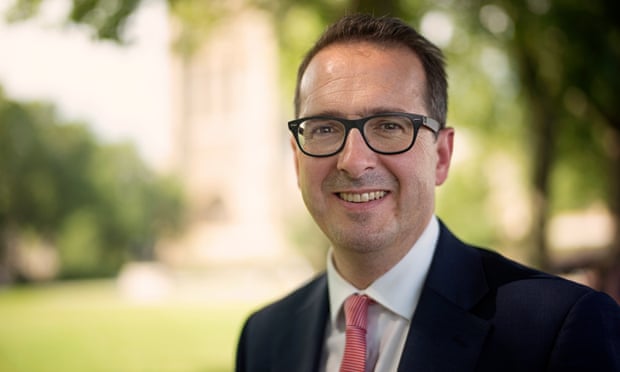
Owen Smith

Is Owen Smith the person to save the Labour Party ? He might be: he could give Labour what it needs above all - time in which to start sorting itself out, to recover.

On 28th June, Labour MPs voted 172-40 that they had no confidence in Jeremy Corbyn as leader: the fact that he remained and remains as leader despite this is unprecedented and morally incomprehensible. I say morally to compare the situation to that of the Brexit vote. Neither the UK Government nor the House of Commons nor Parliament as a whole are bound by the result of the EU referendum legally or technically. The referendum is purely advisory. The House of Commons is sovereign, it can do what it likes. (A curious aspect of the referendum is that the electorate insisted on giving back full power to the House of Commons, power the House didn't want since it has a majority for Remain at the moment.) In fact though the referendum result is absolutely binding in a moral and political sense.

Similarly, a no confidence motion of that size ought to have caused Jeremy Corbyn to resign by all usual expectation in party politics as it has been practiced in the UK hitherto. As an example, consider Mrs Thatcher's resignation in 1990. Mrs Thatcher it need hardly be said was a figure of vastly more political weight and significance than Jeremy Corbyn. When she was challenged for the leadership by Michael Heseltine, she won the first ballot but not by enough to win outright and prevent a second ballot. The voting rules were complicated. There were 372 Tory MPs. She had to secure a 15% lead over her challenger in the first ballot to prevent a second ballot. The results were 204 to her versus 152 for Heseltine with 16 abstentions. In percentages this was 54.8% for her versus 40.9% for Heseltine: thus she was just short of winning outright. Her first response was to fight on. However, senior colleagues persuaded her she couldn't win the next round and so she resigned. She became very bitter about this as time went on: she famously said regarding that advice from her subordinates "It was treachery - with a smile on its face." A more disinterested observer might say that, in the cycle of politics, she was pulled down as she had pulled Ted Heath down in 1975. The point here is that Mrs Thatcher resigned after she had actually won the first vote, but not by enough to win entirely. Her parliamentary colleagues regarded that first round as in effect a vote of confidence. The contrast with Jeremy Corbyn's response to losing the confidence of more than 80% of his MPs is astounding.

The reply of Corbyn and the group around him to the no-confidence vote is that he has an overwhelming mandate from the leadership election in 2015, and this is true. He won among all categories of voters as you can see here in the results on the Labour Party's website: http://www.labour.org.uk/blog/entry/results-of-the-labour-leadership-and-deputy-leadership-election
The night before the no-confidence vote, 27th June, as the Parliamentary Labour Party were meeting to decide whether to have the vote, Momentum held a rally outside the Houses of Parliament. John McDonnell addressed the rally and said the following:

"The protests will be peaceful, but the reason the protests are taking place is because we will not allow the democracy of our movement to be subverted by a handful of MPs who refuse to accept Jeremy's mandate."°

Granted this was said the night before the actual vote, but 80% is hardly a handful, and he must think the principle still applies since he and the Corbyn group continue to fight to retain the leadership.

How does Corbyn manage to continue in the face of such hostility and opprobrium from his colleagues ? Partly, he is used to being beleaguered, his entire experience of politics has been in that position: the more your opponents attack you, the more evidence it is of your own righteousness. Partly, he has achieved almost magically and certainly unexpectedly a position in the Labour Party that his group have been dreaming of since at least when he was involved in Tony Benn's campaign for deputy leader of the Labour Party in 1981. Newsnight unearthed some great footage from that time:


Thanks to Ed Miliband's new rules for the Labour leadership election - of which more later - and nominations from colleagues who neither agreed with him or thought he stood a chance "so that the Left will be represented in the leadership debate", Corbyn leapfrogged even Benn's ambitious goal and became leader. This outcome would have seemed extremely unlikely at the start of the contest. Having got the leadership, Corbyn and his group will go to almost any length not to lose it. There is also the consolation of bathing in his supporters' adoration at rallies across the country during this leadership campaign.

I think the anti-Corbyn Labour MPs are under few illusions as to Owen Smith's wonderfulness. They have to use the means to hand. They face the same set of choices as Julius Caesar when he crossed the Rubicon in January 49 BCE. The context of this decisive move was a crisis in a sustained dispute Caesar was having with his enemies in the Senate. As long as he retained his command in Gaul, he was immune from prosecution: being Consul also had this status. Therefore Caesar wanted to become Consul without any interval from laying down his command: conversely his enemies wanted just such an interval so that they could attack him through the courts: they wanted to prosecute him for what they regarded as illegalities committed while he was Consul ten years earlier. In late 50, Caesar's enemies in the Senate finally got that body to insist that he lay down his command while his great rival and former partner Pompey retained his: Pompey was now allied with the group in the Senate who were determined to preserve the Republic and regarded Caesar and his ambition as fundamentally inimical to it. Caesar now had two choices with three possible outcomes. His first choice was to do nothing, to acquiesce, to obey the Senate: then he would inevitably be destroyed. His second choice was to fight, that is to invade Rome illegally. If he lost the civil war which would definitely follow, again he would be destroyed. But he also might win that war, in which case he won all. From his own point of view, his eventual choice was obvious, and he took it: he invaded. The Rubicon was the border between Caesar's province of Cisalpine Gaul and Italy as the Romans understood it. By crossing it with troops Caesar was committing an irreversible act of insubordination and defiance against the Roman state. Given Caesar's character - which they knew far better than we do - his enemies must have known he would fight, and therefore they must have either wanted a war which presumably they expected to win, led by Pompey, or at least been prepared to accept one.


Julius Caesar (100-44 BCE)


Gnaeus Pompeius (106-48 BCE)


The anti-Corbyn MPs are in a similar position to Caesar in January 49. They can do nothing, acquiesce, leave Corbyn in place, in which case they will probably go down to a disastrous defeat in the next General Election whenever it is and many of them will lost their seats. There is the possibility also that before or after that General Election many MPs could face deselection by hostile constituency Labour parties (CLPs) dominated by Corbyn supporters. (Some Labour MPs also face reselection when their constituencies merge or disappear when the current boundary review for parliamentary constituencies reports its final proposals in 2018. Fifty seats in the House of Commons are due to be abolished, lowering the total from 650 to 600.) If the anti-Corbyn Labour MPs challenge him and lose, all of these consequences still obtain. But in challenging him, the possibility exists - however remote - of removing him and thus perhaps making the outcome of a General Election less bad, and reducing the threat from Corbyn supporters in their CLPs. The boundary changes will take place regardless. As I said above, I don't think many of the MPs think Owen Smith is the answer to all their problems. But the key point for them about the election of Smith is it would buy time in which who knows what might happen. They are fighting to create the space for the Micawber option, to see what turns up, and in their difficult situation this is an entirely reasonable approach, indeed the only one. It's not capitalism in this case but the Labour Party that really might collapse from its internal contradictions.

I think the memory of sticking with Ed Miliband in spite of their misgivings and then the defeat in 2015 has also hardened many Labour MPs' attitude now. Similarly, the threat as it seemed at the time they made their move of Theresa May calling an early General Election. That threat seems to have receded at the time of writing, but we don't really know when it will take place, it could still be soon. Finally, many of the MPs as committed Remainers were fed up at what they regarded as Corbyn's lacklustre and half-hearted performance during the EU Referendum campaign.

Speaking of Ed Miliband, we can see clearly now how utterly disastrous his leadership was. It culminated as we have already seen in the election defeat of 2015. He also instituted the leadership election system under which Corbyn got elected and is almost impossible to remove. The intent of this system's promoters was that if you widen the franchise, you would inevitably get more centrist victors. You can see this argument in full in this piece from March 2014 by John Rentoul, one of the few people who really is a Blairite: http://www.independent.co.uk/voices/comment/ed-miliband-s-labour-party-reforms-are-good-news-for-all-9162681.html *. Reading it now in the light of events is a striking witness of just how wrong someone can be.

To some of Corbyn's supporters - though they wouldn't put it like this - it is as if his very uselessness at modern politics is the clearest guarantee of his authenticity: he is not 'spun'. And isn't Corbyn the most unlikely focus of a personality cult ? Not even his most crazed worshipper could honestly call his colourless and Pooterish personality charismatic. Here he is on 12 July welcoming his automatic inclusion on the ballot paper for the leadership election:


Jeremy Corbyn resembles Tony Blair in this respect: he doesn't care what short or long-term damage he does to the Labour Party as long as he and his faction come out on top.


°From Steve Richards' 'The Corbyn Story' on Radio4, episode 3.
*I picked up this article from Owen Jones on Twitter.

Sunday, 17 July 2016

Blair after Chilcot - Power Corrupts

One forgets. Time passes, a succession of new demands and preoccupations gradually blur our memory of things we once knew so well: faces, characteristic expressions, tones of voice. So it was with a sudden strong rush of recognition that I caught snatches of Tony Blair's marathon press conference on the day the Chilcot report was released. There it all was again - the throb in the voice - the pauses for emphasis in strange places - the sensation of watching an actor, and rather a stagy one. But an actor needs the consent of the audience for his art to take effect, whereas here was the singular spectacle of an actor carrying on despite the fact that almost no one agreed with or believed any more in what he was saying or how he said it: like someone suffering from the delusion that they are the Pope continuing to insist that they are and behaving as if they are while everyone they address knows that they aren't; the consent of his audience had long since drained away. The exaggerated sincerity of Blair's delivery has the result of seeming precisely insincere. It made me think of the French saying "On connaĆ®t la chanson" which means "That old one !" or "I've heard it all before." Because we have heard it all before. This is not 2005, 2001, 1997 or even 1995. That last is more than 20 years ago.

Here is an example of his style in the press conference. Instead of a simple apology - "I was wrong, I'm sorry" - Blair produced a florid and contorted soundbite:

"For all of this I express more sorrow, regret and apology than you may ever know or can believe."

It sounds impressive in a hollow sort of way, but is remarkably vague. No matter how many times I read or hear it, I'm still not sure what it means. It's exact import is slippery. This is the press conference in miniature: both the matter and the manner of its delivery are unsatisfactory.

It's puzzling who this performance was aimed at, or who Blair thought it would convince. He made me think of one of those kings in Hades from Greek myth who had offended the gods, like Tantalus or Sisyphus, condemned to a perpetual task: in his case, trying to fit the shards of his reputation back together, holding it up imploringly each time he has finished only to have it always rejected.

Here is Sir John Chilcot introducing his report:


Here is Tony Blair's press conference:


Both repay a full viewing.

One motive Blair has I think to try and justify himself is the great contrast he must feel between how he is almost universally reviled in the UK now and his former popularity. Recall that Blair won a General Election for a third time in 2005, 2 years after the invasion of Iraq. But at that time the scope of the disaster the occupation was going to become was not yet clear, and the economy was still good. Anthony Eden's reputation was destroyed nearly immediately by the Suez Crisis, whereas Blair's was in slow motion, yet in the end no less entirely.

Sometimes a Prime Minister or a senior leader has what is, despite the complexities, an essentially simple choice to make: yes or no, in or out. For instance, Gordon Brown kept the UK out of the Euro: Blair was broadly pro entry but not strongly enough to overrule him. Even more pertinently, Harold Wilson resisted all pressure from Lyndon Johnson to send British forces to the Vietnam War, despite the fact that the Australian and New Zealand Governments had both joined in. The US Government did not need the forces of those countries in a military sense, it wanted them for a political reason, to show solidarity and support for its policy. Similarly, Blair's conception of our alliance with the US was that we had to join the invasion of Iraq to show our absolute commitment to it, especially so soon after 9/11. This was not the only reason for his decision but it was an important one.

Here is a striking comparison. Who do you think is speaking here ?

"The newspapers have already pronounced their verdict, but I remind those armchair historians sitting comfortably at home in their slippers that it was not I who decreed the historical circumstances. I only had the unenviable task of choosing the lesser of two evils. Whatever my decision, the results would have been negative. Mine were difficult decisions. No one has the right to dismiss me lightly as a murderer. I am a patriot."

What follows provides the clue:

"I saved Poland from great danger. In December 1981 the Soviets were about to trample all over us. Even Gorbachev said so many times over."

It's General Jaruzelski, interviewed in 2001 by Riccardo Orizio in his Speak of the Devil.

Here is what Blair himself has to say about what he calls "trust, as a political concept" in his autobiography A Journey. These reflections come from a section where he is outlining some general principles derived from his experience of the Northern Ireland peace process, unquestionably one of his great achievements, and not from the sections about the Iraq invasion or its aftermath. Two things I would note before the quotation itself: first, as I read this, I can absolutely hear Blair speaking it, I wonder if he dictated the book, the style is so typical and evocative of him, at once chatty but giving one an uneasy sense of something dubious as the words keep tumbling out; second, I'm always reminded when he speaks or writes that, like so many politicians over the centuries in this country, he was originally a barrister, which is to say to those readers unfamiliar with the English legal system that he is a highly trained lawyer.

"By the way, trust, as a political concept, is multilayered. At one level no one trusts politicians, and politicians are obliged from time to time to conceal the full truth, to bend it and even distort it, where the interests of the bigger strategic goal demand it be done. Of course, where the line is drawn is crucial, and is not in any way an exact science. (And don't get too affronted by it; we all make these decisions every day in our business and personal lives.) Without operating with some subtlety at this level, the job would be well-nigh impossible.

But the public are quite discerning, and discriminate between politicians they don't trust at a superficial level, i.e. pretty much all of them, and those they don't trust at a more profound level. This level of trust is about whether the public believe that the political leader is trying to do his or her best for them, with whatever mistakes or compromises, Machiavellian or otherwise, are made. This is the level that really matters."

- Tony Blair, A Journey, p.186-7

Overleaf, on page 188, Blair writes the following about a particular point in negotiations between Gerry Adams and Ian Paisley during Christmas 2006:

"I took horrendous chances in what I was telling each the other had agreed to - stretching the truth, I fear, on occasions past breaking point -"

He can admit this in a context where the outcome is generally agreed to be a success.

Finally, to the second part of my title - Power Corrupts - which is a reference to Lord Acton's famous dictum "Power tends to corrupt, and absolute power corrupts absolutely" which is usually remembered as Power corrupts and absolute power corrupts absolutely. I believe from observation that the awareness, however deeply buried and however strongly denied, of having had great power and used it for bad purposes leaves a mark or shadow on the face of the person who misused it: their face looks corrupt.

Tony Blair


Alastair Campbell


John Prescott


Tony Blair, Alastair Campbell and John Prescott all have just such corrupt faces. I'm struck by it whenever they reappear on television.


Bibliography:

Tony Blair    A Journey   Paperback edition with a new introduction, Arrow Books, 2011
                                         ISBN 9780099525097

Riccardo Orizio       Talk of the Devil: Encounters with Seven Dictators  trans. Avril Bardoni
                                                                                                                     Vintage, 2004
                                                                                                                      ISBN 9780099440673

Click on the labels below to see previous Bulletins related to the subjects covered above.

Saturday, 3 October 2015

An Encounter with Denis Healey

Denis Healey  30.8.1917 - 3.10.2015

Tributes are quite rightly being paid today to Denis Healey, who has died at the age of 98. Everyone agrees he was a Giant of post-war UK politics, which objectively he was. He was famous among other things for his caustic & ready wit; for instance when he described an attack on him by Geoffrey Howe in 1978 as "like being savaged by a dead sheep". You can hear that here: http://news.bbc.co.uk/democracylive/hi/historic_moments/newsid_8185000/8185778.stm

As my own small tribute, I want to record an encounter I had with him when he was Chancellor of the Exchequer - that's the finance minister in the UK - & I was a 9-year-old schoolboy.

It was in 1979 during the General Election campaign, so it must have been in April, & in York, where I live, then & now. The crucial detail to bear in mind here is that I went to a prep school at the time, & we had a ludicrous uniform - it was fantasy Edwardian - which consisted of grey shorts, grey socks with red stripes at the top, a red cap and a bright red blazer. Denis Healey was campaigning at the factory gate at Rowntrees Chocolate factory. My family lived five minutes round the corner at the time - what is now a cycle lane was then a railway line on which cocoa beans were delivered to the factory: I used to hear the trains rocking & grinding in the early mornings, it was an oddly comforting sound - & I suppose I & my friend Robin must have been walking to my house, seen the crowd & gone to see what it was all about. Denis Healey was addressing the crowd, & for some reason - arrogance probably - I started heckling him. When I was done, he just turned around & said -

"Well, at least your jacket's the right colour"

at which the crowd collapsed in laughter, & I was absolutely mortified, crushed. Robin & I must have slunk away, because there was no recovering from that. 

I remember this encounter vividly & with affection for Mr Healey: I remember it  as a brief, real interaction with a great man, & the sharpness, readiness & effectiveness of his wit, excercised on a cocky little oick as I was then who had no understanding yet at all of who Denis Healey really was. May he rest in peace.

Sunday, 8 January 2012

Why Ed Miliband Should Resign Immediately

I write this as a long-term Labour supporter & voter, & as a friend of the Party who wants to see it succeed.

I would say to people who support Ed Miliband, don't confuse loyalty to the Party with loyalty to its current leader, they are not the same thing. Ed M was elected leader on 25th September, 2010, & this is quite long enough to get the measure of him in that role. He is useless. Many Labour supporters I speak to think he is rubbish. He is unable to galvanise his own core support: never mind reach out to trade unionists, disillusioned LibDems, the Occupy people, laid-off public sector workers, & other opponents of the Coalition who don't know where to go [thanks to @fauxpaschick for this thought.] There's a vast reservoir of anti-Coalition sentiment in the UK right now; Ed M is unable to tap it.

I grant you that the state of the Labour Party is not entirely Ed M's fault. The Party is still in shock, paralyzed after Tony Blair took it to places it never thought it would go, especially involvement in the invasion of Iraq. Too close a similarity to Tony Blair is a reason for suspicion of David Miliband within the Party. Another source of its paralysis is the trauma of the long economic boom of the Noughties turning to shit in their hands.

The Labour Party still doesn't know what it is or what it wants to do post-Blair & Brown, & Ed M & his team have so far been unable to help it with either of these questions.

At the moment, the Labour Party is treading the road of failure, led by pygmies. It remains to be seen whether it can pull itself together & get on a better road.

It doesn't matter whether in private life Ed M is a nice guy - a claim that was often advanced for Gordon Brown. It doesn't matter if his heart is in the right place - which, judging by his Conference speech during which he gave benefit claimants a thorough kicking, I doubt [for more on this, see my post of 1st October, 2011]. What matters is - is he an effective politician ? & the answer to that is - no. Ed M is a professional politician to his fingertips, but he is not an effective one.

In a democratic system, it doesn't matter how wonderful your ideas or personality are if you can't win a majority. Only if you get elected into power will you have a chance to implement your policies & maybe make a bit of difference to people's lives.

Ed M will never lead the Labour Party to getting a majority at a General Election. You may disagree with me about this. Time will tell which of us is right.

We should learn from the ruthlessness of the Tories with regard to their leaders & ditch Ed before it is too late & the next Election is lost.


Addendum: I had a text conversation with my friend Stu about this post. I said to him: "Labour I think are sleepwalking to defeat, & letting the Tories run riot in the meantime." To which Stu responded: "I think they can't really be bothered to take on running the country again. It's the only reason I can think of, why they're so lacklustre about it."

I realise that the system for deposing a current Labour leader & electing a new one is complex & difficult. But none of that was a problem when they were crowning Gordon Brown. Where there's a will, there's a way.

Wednesday, 28 September 2011

Steve Richards Bang On the Money

This is transcribed from television, specifically The Daily Politics Conference Special, 27.9.11. I wanted to preserve it because Steve Richards makes a point which is absolutely spot on.

The context: Andrew Neil, Danny Finkelstein & Steve Richards are discussing the Labour Party Conference so far, just before Ed M was going to give his Leader's speech; the pre-match build up. At the end of their discussion they start talking about the fact that up to now, as far as they are aware, neither Tony Blair nor Gordon Brown has been mentioned in any of the major speeches.

Steve Richards then says the following (when he says
they're he means the current leadership of the Labour Party)
-

Steve Richards: The Blair & Brown absence I think explains partly why they're all so bewildered. There were these two figures who dominated everthing in this Party for more than a decade ....

Andrew Neil: Since 1994 onwards !

Steve Richards: Since '94 onwards. And so what we're seeing really are sort of half-formed politicians stifled by that duopoly having to learn Politics in the full glare of scrutiny now.


Wednesday, 14 September 2011

Why do the Unions go on funding Labour when the Party doesn't do exactly what they want ?

Tories love to taunt the Labour Party by saying that it is in hock to the Trade Unions. A more complicated version of this is to say that Labour is a wholly-owned subsidiary of the Unions. But the people making these taunts know that they are not true. It is true that about 87% of Labour's funding does come from the Trade Unions (source: http://www.guardian.co.uk/politics/2011/may/25/labour-party-donors-unions). But Ed Miliband refused to back the strike action taken by four Unions in June this year, and reiterated that refusal in his speech to the TUC Congress yesterday, a position that was greeted by boos and heckling.

So given that the Unions are overwhelmingly Labour's main source of funding, why won't the leader of that party do exactly what they want, and why do they put up with it and go on funding the Party ?

The answers come if you consider their alternative. They are free to withdraw funding and therefore bankrupt and destroy Labour, and set up their own new Party whose policies would be under their complete control. The problem is, no one would vote for it, and they know this. Labour may not give the Unions everything they want, but they are a viable political party with a network of activists, historical roots and a base of support in the country, which can and have been translated into becoming the Government. Ed Miliband, or any Labour leader, may appear to hold a weak hand because of Labour's financial dependence on the Unions; but on the other hand he knows, and the Union leaders know, that the Labour Party is the best offer they are ever going to get in terms of meaningful access to power, and that effectively the Unions have nowhere else to go.

This explains what is otherwise a puzzle: why the Unions would go on supporting a Labour leader they were primarily responsible for installing who does not support them on strikes over what they regard as critical issues for their membership; and why they would go on funding the Party of which he is a head.